
Other conditions treated in Moate
Other Conditions We Treat
We also see a range of hip, groin and elbow problems, from everyday aches and persistent pain to sports-related injuries and rehabilitation following surgery.
A clear way forward
Understand the problem and move forward
Hip, groin and elbow pain can affect much more than just the area that hurts.
It can make walking, running, exercising, working, lifting, playing sport or simply getting through your normal day more difficult.
Sometimes the problem starts after a specific injury. At other times, pain develops gradually without one obvious cause.
You may have been told that you have arthritis, a tendon problem, tennis elbow, a muscle strain or another condition and be unsure what that actually means for you.
Even if your pain has been present for a long time, or keeps coming back, there is often a lot that can be done to improve how you feel, how well you move and your confidence in using the affected area.
At Midlands Physio, our aim isn't simply to relieve your pain. We want to understand what may be contributing to your symptoms, help you get back to the things that matter to you and give you the knowledge and tools to manage your problem with confidence.
Other conditions treated in Moate
Hip Pain
Hip pain can make walking, getting in and out of a chair, climbing stairs, exercising, running or sleeping uncomfortable.
Hip pain can come from a number of different structures and can sometimes be influenced by the lower back, pelvis or surrounding muscles and tendons.
You may have been told that you have hip arthritis, a tendon problem or another structural change. While these findings can be relevant, they don't always tell us exactly how much pain you should be experiencing or what you are capable of doing.
A thorough assessment helps us understand the bigger picture and decide what is most appropriate for you.
- Common hip problems we treat
- At Midlands Physio, we see people with a wide range of hip problems, including:
- Hip pain affecting walking or everyday activities
- Hip osteoarthritis
- Lateral hip pain and greater trochanteric pain syndrome
- Gluteal tendinopathy
- gluteal bursitis
- Hip and groin pain associated with running
- Hip flexor-related pain
- Hip pain following surgery
- Hip pain affecting exercise or sport
Is my hip pain caused by arthritis?
Hip arthritis is common, particularly as we get older.
An X-ray may show changes such as narrowing of the joint space or other signs of arthritis. However, the amount of change seen on an X-ray doesn't always correspond directly with the amount of pain someone experiences.
This means that being told you have arthritis doesn't necessarily mean that you need to stop exercising or that surgery is your only option.
Exercise and strengthening can be an important part of managing hip arthritis and maintaining your ability to walk, exercise and enjoy your normal activities.
We'll help you understand what your diagnosis means for you and develop a plan based on your symptoms, your current ability and what you want to get back to doing.
What is lateral hip pain?
Pain on the outside of the hip is common, particularly in people who are active or who have recently changed their activity levels.
It is often referred to as greater trochanteric pain syndrome and can involve the tendons and other tissues around the outside of the hip.
Pain may be worse when lying on that side, walking, running, climbing stairs or standing on one leg.
Management usually involves gradually improving the capacity of the muscles and tendons around the hip while modifying activities that are aggravating your symptoms.
Do I need an X-ray or MRI for hip pain?
Not necessarily.
Imaging can be useful in certain situations, particularly where there has been a significant injury or where the result is likely to change how your treatment is managed.
However, a clinical assessment is often the most useful starting point.
If you already have an X-ray or MRI report, we can help explain what the findings mean and how they relate to your symptoms and your goals.
Should I rest if my hip hurts?
Sometimes you may need to temporarily reduce or modify activities that are aggravating your symptoms.
However, complete rest is rarely the long-term answer.
Your hip needs appropriate movement and loading to maintain and build its capacity. We'll help you work out what you can continue doing and how to gradually increase your activity again.
Other conditions treated in Moate
Groin Pain
Groin pain is particularly common in people who play sport, run or regularly take part in activities involving sprinting, kicking or changing direction.
Groin pain can sometimes be difficult to pinpoint because several different structures around the hip and pelvis can produce pain in this area.
This is why simply assuming that every groin problem is a "groin strain" isn't always helpful.
A proper assessment can help identify the factors that may be contributing to your symptoms and guide your rehabilitation.
- Common groin problems we treat
- These include:
- Groin strains
- Muscle and tendon injuries around the groin
- Groin pain associated with running
- Sports-related groin pain
- Hip-related groin pain
- Recurrent groin problems
- Groin pain following an increase in sporting activity
- Groin pain affecting work, exercise or everyday activities
Is my groin pain just a muscle strain?
Sometimes it is.
A sudden sprint, change of direction, kick or awkward movement can cause an injury to one of the muscles around the groin.
However, groin pain doesn't always result from one obvious injury.
Pain can also develop gradually and may involve the muscles and tendons around the hip and pelvis, the hip joint itself or other structures in the area.
We'll look at the wider picture, including your symptoms, strength, movement, activity levels and the demands you're trying to return to.
Do I need to stop playing sport?
Not necessarily.
Depending on the severity of your symptoms, it may be possible to continue some training while temporarily modifying the activities that are causing the most irritation.
For more significant injuries, you may need to reduce your sporting activity initially before gradually building back towards running, sprinting, changing direction and other demands of your sport.
The aim is not simply to get you pain-free. It's to rebuild enough strength and capacity to cope with your sport again.
Why does my groin pain keep coming back?
Recurring groin pain can be frustrating.
Sometimes people return to sport as soon as the pain settles without giving the affected muscles and tissues enough time to rebuild their strength and capacity.
Other times, the demands of training increase faster than the body is able to adapt.
We'll look at your current strength, movement, training load and the specific demands of your sport to help identify what may be contributing to the problem.
Your rehabilitation will then be progressed gradually so that you can build your capacity rather than simply waiting for the pain to disappear.
Other conditions treated in Moate
Tennis Elbow & Other Elbow Pain
Elbow pain can affect gripping, lifting, carrying, working at a computer, using tools, exercising or playing sport.
One of the most common causes is tennis elbow, which can develop gradually and isn't limited to people who play tennis.
It can be associated with repeated gripping and lifting, gym exercises, manual work, racquet sports or simply an increase in the amount of load being placed through the forearm.
- Common elbow problems we treat
- These include:
- Tennis elbow and lateral elbow pain
- Golfer's elbow and medial elbow pain
- Elbow pain associated with gripping and lifting
- Elbow pain following an injury
- Elbow stiffness
- Elbow pain affecting work, exercise or sport
- Rehabilitation following elbow surgery
What is tennis elbow?
Tennis elbow is a common cause of pain around the outside of the elbow.
Despite its name, you don't need to play tennis to develop it.
It can occur when the tendons and muscles around the outside of the elbow are exposed to more load than they are currently able to tolerate.
You may notice pain when gripping, lifting, using a mouse or keyboard, carrying bags or performing exercises such as curls or rows.
Treatment usually involves gradually building the strength and capacity of the affected muscles and tendons while modifying activities that are aggravating your symptoms where necessary.
Do I need to stop using my arm?
Usually, complete rest isn't necessary.
In fact, avoiding all activity for too long can make it more difficult to rebuild the strength and capacity you need.
Instead, we'll look at what activities are currently aggravating your elbow and work out how you can modify them while gradually increasing the amount of load your elbow can tolerate.
This might involve changing how you lift, reducing the weight or volume of gym exercises temporarily, or modifying certain work activities.
How long does tennis elbow take to settle?
Tennis elbow can sometimes take time to improve, particularly if it has been present for several months.
That doesn't mean that nothing can be done.
A gradual strengthening programme, appropriate activity modification and understanding how to manage the loads placed through your elbow can all be important parts of recovery.
We'll help you develop a plan that fits around your work, exercise and normal activities rather than simply telling you to rest until it goes away.
Your route forward
How can physiotherapy help?
It starts with a thorough assessment
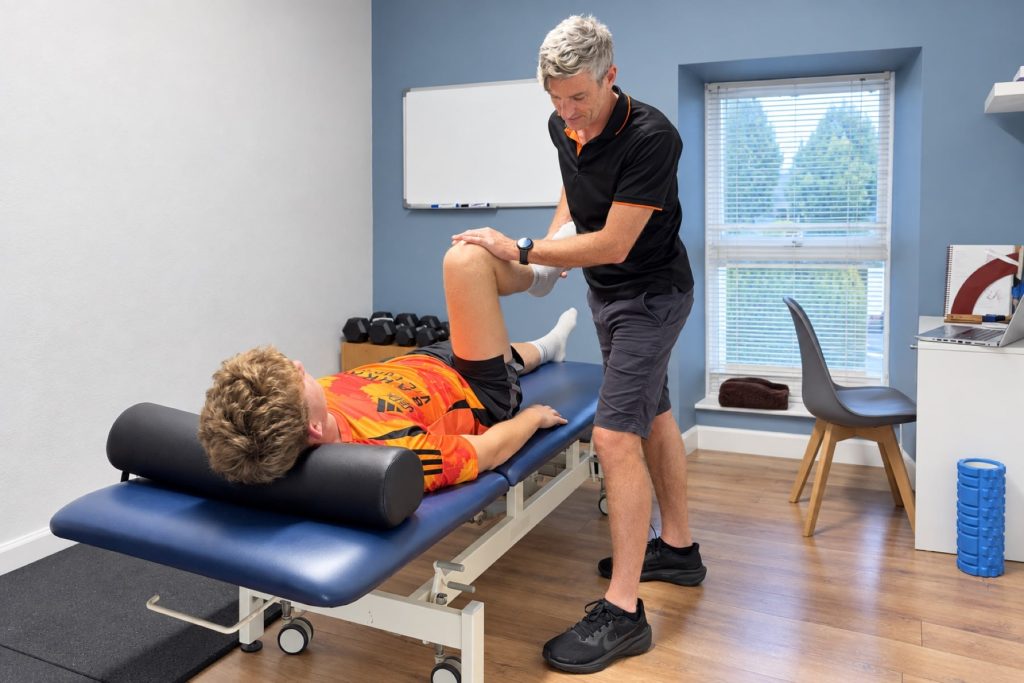
We'll take time to understand your symptoms, how they're affecting you and what you want to get back to. We'll then assess your movement, strength and function to help determine what may be contributing to the problem.
From there, we'll develop a treatment plan around your individual needs and goals.
Exercise and strengthening
Exercise is often one of the most important parts of rehabilitation.
Depending on your problem, this might involve strengthening the muscles around your hip, pelvis, thigh, groin or forearm, as well as gradually improving your ability to tolerate the activities you want to do.
Your programme will be tailored to you rather than simply giving you a generic set of exercises.
Hands-on treatment
Manual therapy can sometimes be useful for reducing pain or improving movement, particularly in the short term.
Where appropriate, it may form part of your treatment alongside exercise, education and other strategies rather than being the only treatment you receive.
Advice and education
Understanding your problem can make a big difference to your recovery.
We'll explain what we think is contributing to your symptoms, what you can safely do and how to manage your activities while you recover.
If you've been given a diagnosis or received a scan, we'll also help you understand what the findings mean for you.
Returning to work, exercise and sport
Getting you back to normal life is an important part of rehabilitation.
Whether you want to return to running, the gym, GAA, golf, work, walking or another activity, we'll help you gradually build towards the demands you need to cope with.
Support between appointments
Your recovery doesn't stop when you leave the clinic.
Where appropriate, you'll have access to a personalised online exercise programme with videos and instructions, making it easier to know exactly what you should be doing between appointments.
We also provide helpful follow-up information where appropriate, so you're not simply left with a sheet of exercises and expected to figure everything out yourself.
The aim is to give you the knowledge, confidence and tools to take an active role in your recovery.
Your route forward
When should I see a physiotherapist?
You don't necessarily need to wait until your pain becomes severe before getting help.
- Physiotherapy may be useful if:
- Your pain is interfering with everyday activities
- You're struggling to exercise or play sport
- You've stopped running because of pain
- Your symptoms are affecting your work
- Your pain keeps coming back
- You've had an injury that isn't improving as expected
- You're unsure what exercises or activities are safe
- You've been diagnosed with arthritis or a tendon problem
- You've been told you need surgery or are considering your options
- You've tried managing the problem yourself but aren't making progress
A physiotherapy assessment can help you understand what's happening and give you a clear plan for moving forward.
Helpful answers
Frequently asked questions
Open a question below for Derek’s guidance. If your symptoms are unusual or causing concern, contact the clinic or seek appropriate medical advice.
Can physiotherapy help if my pain has been there for a long time?
There may still be plenty that can be worked on.
Persistent pain can sometimes be more complicated than a recent injury, but that doesn't mean that nothing can be done.
Treatment may involve gradually increasing your strength and physical capacity, improving your confidence with movement, modifying activities that are aggravating your symptoms and developing strategies to manage future flare-ups.
Do I need a scan before seeing a physiotherapist?
Usually not.
A clinical assessment is often the best place to start.
If there are concerns that require further investigation, we'll discuss this with you and advise you on the most appropriate next step.
If you already have an X-ray or MRI report, bring it with you and we'll help you understand what it means.
Should I stop exercising if I have hip, groin or elbow pain?
Not necessarily.
In many cases, exercise can be part of the solution rather than the problem.
You may need to temporarily modify the amount or type of exercise you're doing, but the aim is usually to gradually rebuild your capacity rather than avoid activity indefinitely.
Can I continue playing sport with a groin injury?
It depends on the nature and severity of the problem.
Some injuries require a period of reduced activity, while others can be managed while continuing modified training.
We'll assess your symptoms and help you work out what level of activity is appropriate before gradually progressing you back towards the demands of your sport.
Take the next step
Hip, groin and elbow pain can be frustrating, particularly when it starts interfering with the things you enjoy.
Whether you've recently picked up an injury, have been dealing with pain for months or simply aren't sure what's causing your symptoms, a physiotherapy assessment can help you understand what's happening and work out what to do next.
At Midlands Physio in Moate, Westmeath, we'll work with you to develop a clear, practical plan based on your symptoms, your goals and the activities that are important to you.
Or, if you're unsure whether physiotherapy is right for you, get in touch and we'll be happy to discuss your symptoms.